
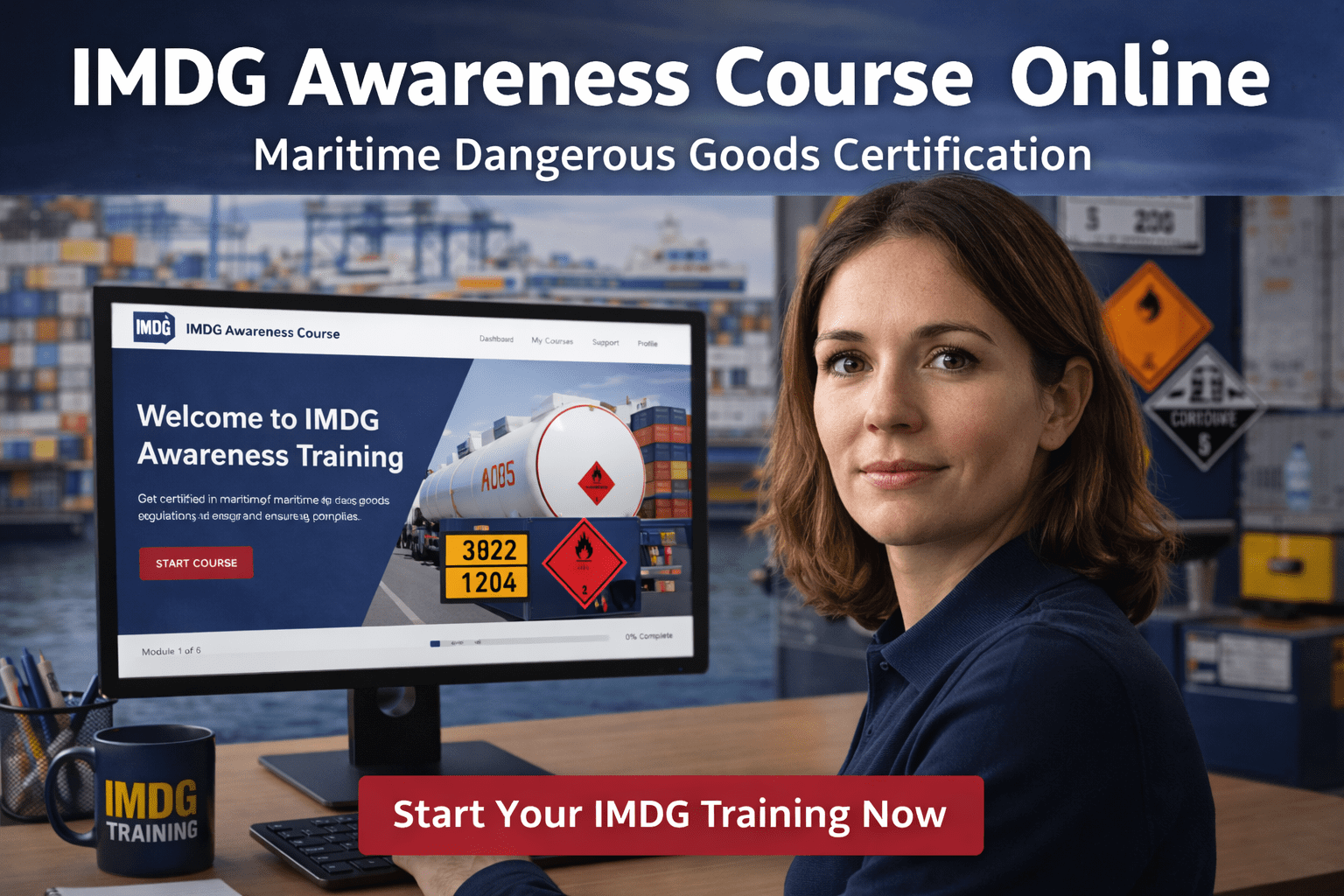
The global economy depends heavily on maritime transport. Every day, thousands of vessels move across the world’s oceans, carrying goods that sustain industries, supply chains and everyday life. Among these goods are significant volumes of dangerous substances, ranging from chemicals and fuels to batteries and industrial materials. While essential, these products introduce risks that must be carefully managed. For companies involved in shipping, exporting or logistics, understanding how to handle these materials safely is not optional. It is a fundamental requirement. This is where an IMDG Awareness Course becomes indispensable.
Who Needs IMDG Training in Maritime Logistics?
The framework that governs the safe transport of dangerous goods by sea is the IMDG Code, developed by the International Maritime Organization. This internationally recognized code establishes detailed rules for classification, packaging, labeling, documentation and stowage of dangerous goods transported by sea. Its purpose is clear: to protect life, property and the marine environment by ensuring that hazardous materials are handled in a consistent and controlled manner.
For many companies, especially those new to international shipping, the IMDG Code can appear complex and difficult to navigate. It is a comprehensive document, covering a wide range of scenarios and technical requirements. However, beneath this complexity lies a logical structure designed to minimize risk. An IMDG Awareness Course translates these requirements into practical knowledge, making them accessible and relevant to employees who are directly involved in the shipping process.
The importance of awareness training cannot be overstated. While specialists such as dangerous goods advisors or compliance managers may have in-depth knowledge of the regulations, the majority of employees involved in handling goods require a different level of understanding. They need to recognize hazards, follow procedures correctly and know how to respond in case of irregularities. This is precisely the focus of an awareness-level course. It provides the essential knowledge required to perform tasks safely and in compliance with international standards.
One of the foundational topics in IMDG training is the classification of dangerous goods. Every substance transported by sea must be assigned to a specific hazard class, which reflects the type of risk it presents. These classes range from flammable liquids and gases to toxic substances and corrosive materials. Understanding this classification system is critical, as it determines how goods must be packaged, labeled and handled. Without this knowledge, it is impossible to ensure compliance or maintain safety.
👉 Start Your IMDG Training Now!
What You Will Learn in This IMDG Awareness Course
How Online IMDG Training Works
The online format of the course offers significant advantages for modern organizations. It allows employees to access training materials at any time and from any location, making it easier to integrate learning into daily operations. This flexibility is particularly valuable for companies with international teams or complex logistics networks. It also ensures that training can be delivered quickly, which is essential when new employees join or when regulatory updates occur.
Consistency is another key benefit of online training. All participants receive the same structured content, ensuring a uniform level of knowledge across the organization. This consistency supports standardization of procedures and reduces the risk of misunderstandings or errors. It also simplifies compliance management, as companies can demonstrate that all relevant personnel have been trained according to the same standards.
Certification plays an important role in the training process. Upon completion, participants receive a certificate that confirms their understanding of IMDG awareness principles. This certificate serves as proof of training and can be used during audits or inspections. It also provides reassurance to clients and partners that the company is committed to safety and compliance.
In practical terms, companies that invest in IMDG awareness training often experience noticeable improvements in their operations. Employees become more confident in handling dangerous goods, errors decrease and overall efficiency increases. These benefits contribute to a safer working environment and can also lead to cost savings by preventing incidents and delays.
👉 Enroll Now – Maritime Compliance Made Easy!
IMDG Compliance for International Shipping Operations
The importance of IMDG training is further reinforced by the global nature of maritime transport. Ships travel between continents, carrying goods through diverse regulatory environments. A standardized approach to safety is essential for ensuring that these operations run smoothly. The IMDG Code provides this standardization, and awareness training ensures that employees understand and apply it correctly.
Regulatory updates are another factor to consider. The IMDG Code is revised regularly to reflect new developments, technologies and lessons learned from past incidents. Companies must ensure that their employees stay informed about these changes. Online training platforms can be updated quickly, providing access to the latest information and supporting continuous compliance.
From a strategic perspective, investing in IMDG awareness training is a decision that goes beyond regulatory compliance. It demonstrates a commitment to safety, professionalism and operational excellence. In a competitive market, this commitment can enhance the company’s reputation and strengthen relationships with clients and partners.
It is also important to recognize that safety in maritime transport is a collective effort. Regulations provide the framework, but it is the people within the organization who ensure that these rules are followed. Training plays a crucial role in empowering employees to take responsibility and act with confidence. When individuals understand the risks and know how to manage them, the entire organization becomes more resilient.
In conclusion, the IMDG Awareness Course Online offers a comprehensive and practical solution for companies involved in maritime transport of dangerous goods. It provides essential knowledge, supports compliance and enhances operational performance. By choosing an online format, companies gain flexibility, consistency and access to up-to-date content, making it easier to meet the demands of a complex and evolving industry.
For organizations looking to operate safely and successfully in global shipping, this training is not just a requirement. It is a valuable investment in people, processes and long-term success.
